Context
A buyer who lives in the United Kingdom wants an apartment in Torrevieja where she can spend her holidays and which, in the weeks she is away, she can let to tourists. She finds a resale apartment at €275,000 and will pay without a mortgage.
Buying and letting · Illustrative example · Torrevieja — purchase costs and a holiday let
Illustrative example, based on the situations I see most often: a buyer resident in the UK, a €275,000 resale apartment, what it costs on top of the price, what to check before letting it to tourists and how the rent is taxed.
A buyer who lives in the United Kingdom wants an apartment in Torrevieja where she can spend her holidays and which, in the weeks she is away, she can let to tourists. She finds a resale apartment at €275,000 and will pay without a mortgage.
Before any deposit she needs three answers: what the purchase costs on top of the price, whether this exact address can be let to tourists, and how Spain taxes the rent of someone who lives outside the EU.
I review the documents before the arras and ask for the planning position and the community rules for that address. The deed is signed at the notary seven weeks after the arras. The tourist registration is filed only once the town hall and the community allow it.
She signs knowing the full cost, about €301,650, and the tax on her rent: 24% of every euro, with no expenses, in one yearly return.
Key figures
Illustrative example, based on the situations I see most often. The buyer, the apartment and the amounts are invented to show how the rules work; this is not a client file. The tax rates, filing windows and registration steps are the ones in force when I checked them, on 12 October 2026.
A buyer who lives and pays tax in the United Kingdom wants an apartment in Torrevieja. She will spend her own holidays there and, in the weeks she is away, would like to let it to tourists. She finds a resale apartment at €275,000, sold by a private owner who lives in Spain, and will pay without a mortgage.
Two things are easy to underestimate in her position: what the purchase costs on top of the price, and the fact that a holiday let starts with the address, not with the listing.
| Item | How it is worked out | Amount |
|---|---|---|
| Price | Agreed with the seller | €275,000 |
| Transfer tax (ITP) | 9% of €275,000, the general Valencian rate for a resale home (11% when the value is above €1 million) | €24,750 |
| Notary and land registry | Approximate; the final bills depend on the deed | about €1,900 |
| Total | Price plus tax, notary and registry | about €301,650 |
ITP is charged on the price or on the Catastro’s reference value (valor de referencia), whichever is higher; in this example the reference value is below the price. Legal and tax advice and bank charges are not included: they depend on each purchase. The seller lives in Spain, so there is no withholding; when the seller is not resident in Spain, the buyer must withhold 3% of the price for Hacienda.
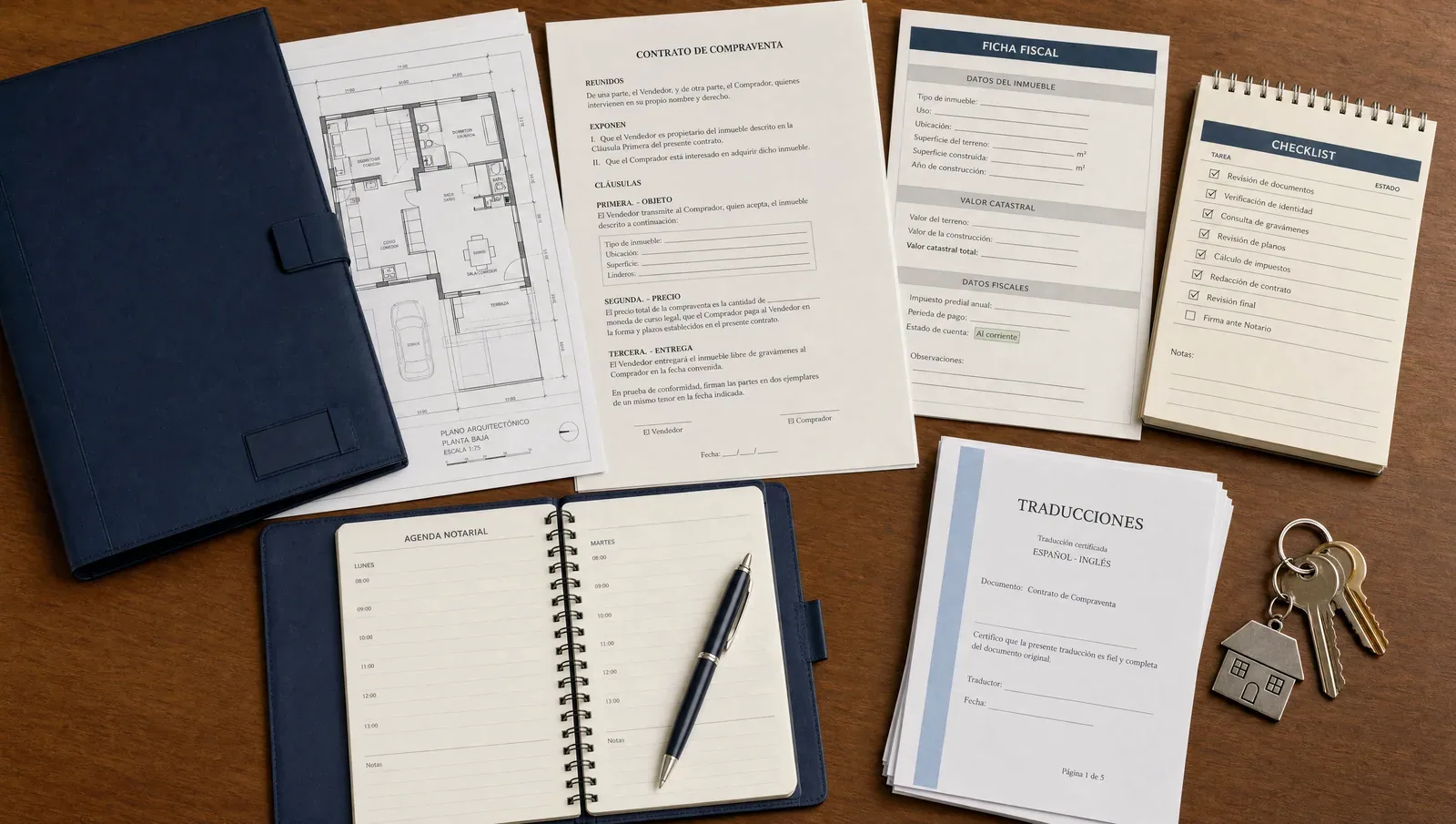
The arras is the moment the deal becomes binding, so everything that could change her mind is read before it. The five documents come first: the nota simple, the habitability certificate, the certificate of community debts, the town-hall planning certificate and the tax documents. Gathering them takes two to four weeks.
Because she wants to let the apartment to tourists, two more questions go on the same list, both about this exact address:
If either answer is no, the plan changes before any money is committed: she can still buy for her own use, but she buys knowing it.
In this example the deed is signed at the notary seven weeks after the arras. Between arras and notary, six to eight weeks is what I normally see. It is a reference for this example, not a promise: the notary’s diary, the documents and, when there is one, the bank set the real date.
Owning the apartment does not make it a holiday let. In the Valencian Community, the order in this example is:
The regional rules also distinguish stays of up to ten consecutive days from other arrangements, which matters for how she plans to let it. I do not put a date on the first guest in this example: it depends on the town hall and the community, not on the buyer. More in my piece on the short-term rental licence in the Valencian Community.
Because she is tax resident in the United Kingdom, outside the EU and the EEA, Spain taxes her rent at 24% of the gross, and no expense can be deducted: not the community fees, the IBI, the insurance or the cleaning. Residents of another EU state, Iceland or Norway pay 19% and can deduct the expenses linked to the let.
| Line | Amount |
|---|---|
| Rent received in the year | €15,000 |
| Expenses she can deduct | €0 |
| Taxable base | €15,000 |
| Rate | 24% |
| Spanish tax (Modelo 210) | €3,600 |
Illustrative figures: €15,000 is an assumption for this example, not a forecast of what the apartment will earn.
The rent is declared through Modelo 210. For rent from 2026 onwards, a year’s rent with tax to pay can be grouped into one return, filed between 1 and 20 April of the following year.
The days the apartment is not let still count. For those days she also declares imputed income, a percentage of the cadastral value in proportion to the days, again with no expenses and at 24%; for income from 2026 onwards it is filed between 1 April and 31 December of the following year. A year with rent and empty weeks needs both returns. The Guardamar example shows how imputed income is worked out.
When a buyer comes to me with a holiday-let plan, I start with the address and the community, before the arras, and I put the tax on the rent into the numbers at the rate that applies to where she lives. The apartment can be the same; the plan that holds is the one built on those answers.
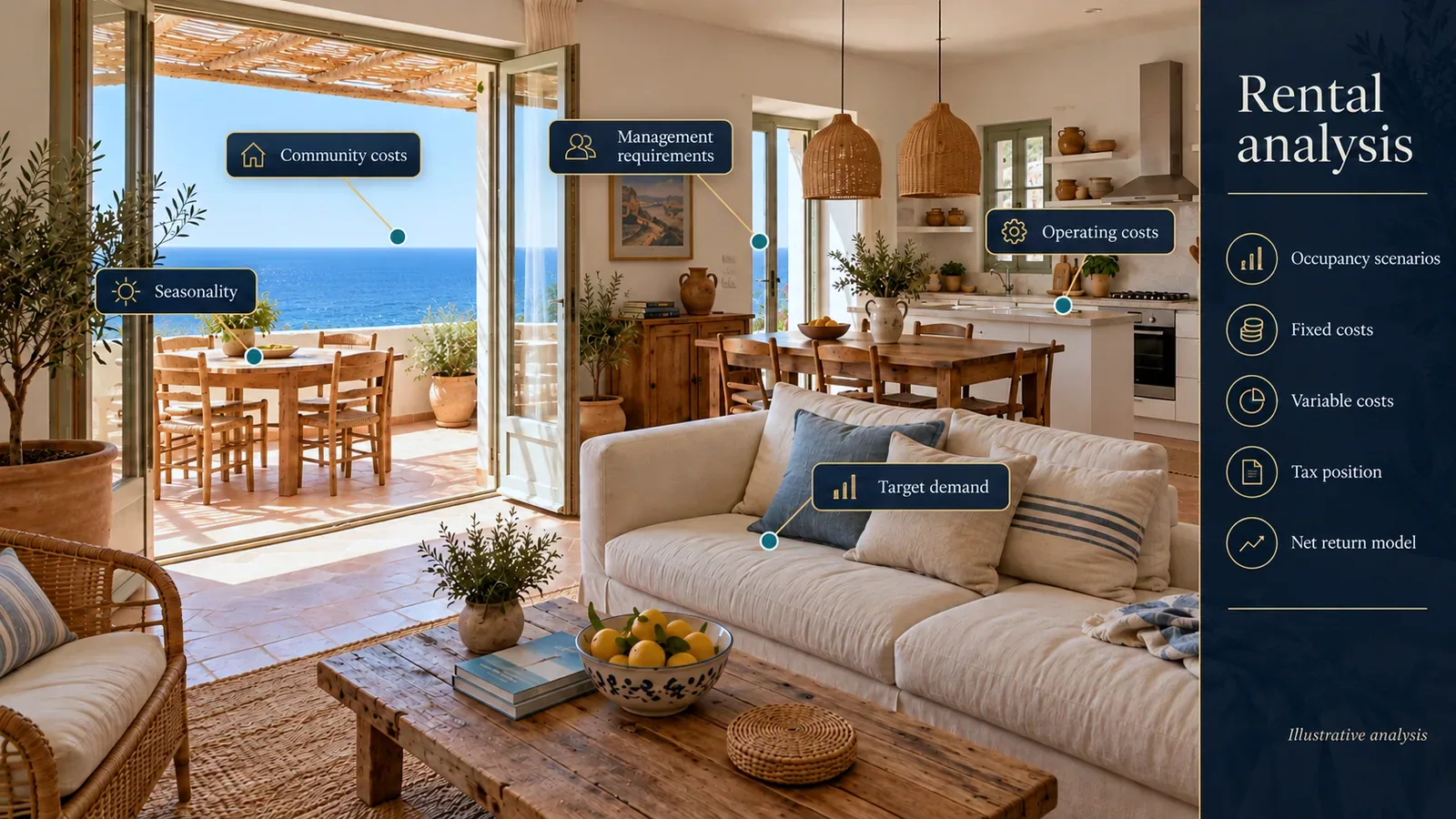
Illustrative example, based on the situations I see most often. It is not a client file: the buyer, the apartment and the amounts are invented to show how the rules apply, and the image does not depict a real property. Your own position depends on your documents.
A property-by-property route through municipal planning, community consent and Valencian registration before offering short stays.
Nota simple, cédula, community debts, planning file, tax charges — in that order, with examples.